By J.A. Jones, Contributor
ST. PETERSBURG — For decades, health and wellness practitioners, doctors, nurses, educators, artists, and everyday community people living, working, and playing in under-resourced communities have sought practical and innovative ways to improve their minds, bodies, and souls.
The goal? To stay as sane and healthy as possible under the barrage of universally practiced “isms” — sexism, racism, classism, ageism, ableism…along with the controls on living “out” one’s gender expression and intimate partnering.
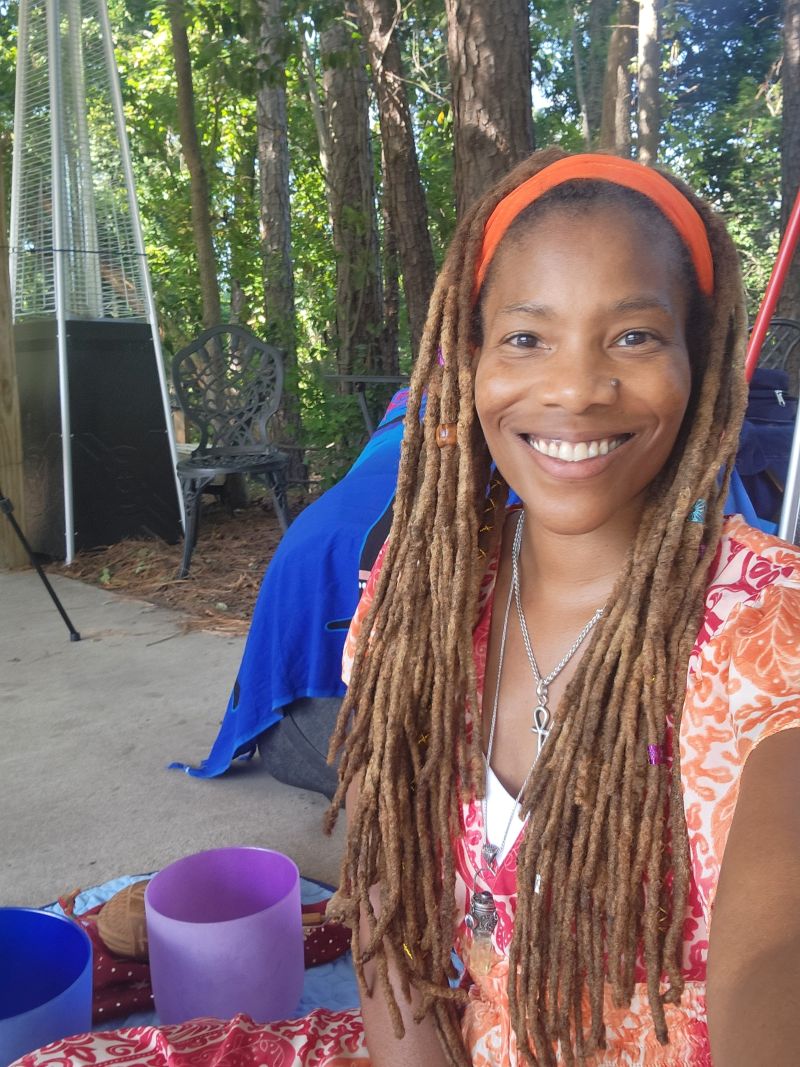
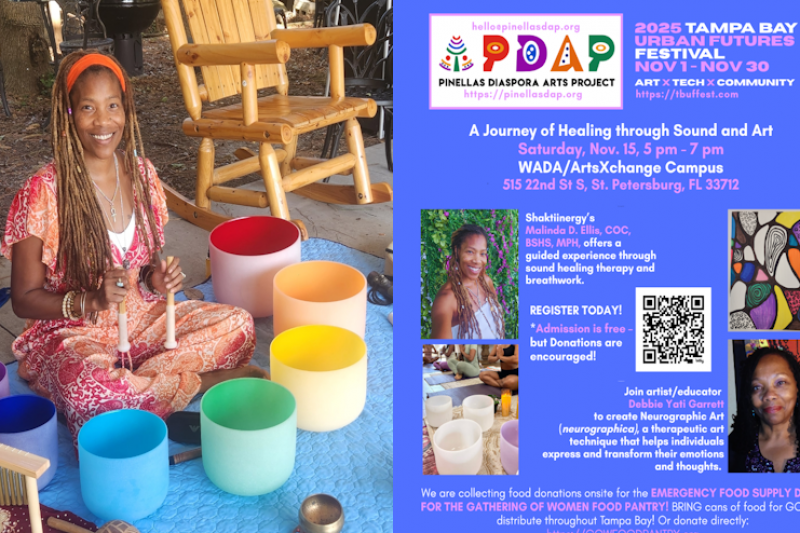
Malinda D. Ellis leads a full-spectrum sound healing workshop at WADA on Nov 15
In the last few decades, research in neurodiversity has finally begun to come to the fore, along with a multitude of studies on suicide, addiction, and other deadly consequences of ignoring poverty and the social determinants of health.
Locally, the conversation has been galvanized and publicized, and wellness organizations and practitioners funded through leaders like the Foundation for a Healthy St Petersburg (FHSP).
FHSP’s president and CEO, Dr. Kanika Tomalin, has stated, “Roughly four miles apart, there’s a 16-year difference,” when discussing the life span of people living in Campbell Park vs those living in Snell Isle. “It’s a story that plays out the same at every stage of life, and in our community, it directly correlates to race.”
Of course, the struggle for improved health outcomes starts long before the last decade. The history of St. Pete’s medical advances and advocates is mighty and rich. Gwendolyn Reese’s history series “I AM” in the Weekly Challenger highlights local historic and herstoric figures in the journey to save lives, deliver healthy babies, and fight against health crises such as drug abuse.
FHSP’s’s website holds a wealth of vital research and history. One paper on the site notes, “Segregated healthcare meant that for decades, there were no hospitals or doctors in St. Petersburg that would treat Black patients. Because of this, midwives, nurses, and volunteers were an important means of healthcare for Black residents, providing them with maternity services and general medical care well into the twentieth century.”
In 2021, Gwendolyn Reese, the president of the African American Heritage Association of St. Petersburg, and a group of local proponents, educators, activists, and researchers sought legislative acknowledgment that the City’s historic racism be declared a health crisis by the City. “This resolution is addressing structural racism – actual policies and laws and acts that have been enacted in this city historically and currently that adversely impact the physical health of African-Americans,” said Reese.
Another wave of local practitioners have taken up the struggle to address health in rec centers, churches, cultural hubs – basically, wherever yoga, fitness, mental health strategies, and wellness techniques can be shared with community residents.
On Saturday, November 15, Shaktiinnergy’s founder Malinda D. Ellis, CPD, BSHS, and MPH, will be bringing Sound Healing to Upper Historic Deuces Corridor partner the Warehouse Arts District/ ArtsXchange.
The free workshop also features neurographica, a technique of drawing that encourages relaxation and stress reduction, led by educator and artist Debbie Yati Garrett, and is part of Pinellas Diaspora Arts Project’s Tampa Bay Urban Futures Festival.
Ellis is a life and wellness coach whose practice helps clients to “unveil the blind spots that might be hindering your ability to make the best choices.” Her work helps people release trauma and negative habits to help them “embrace a path that aligns with your highest good.”
Ellis’ own journey to health includes overcoming her own personal challenges and family traumas. She shared that seeds of her quest to bring healing to communities were laid in her childhood experiences with her mother.
The sound bowl practitioner says her mother’s “seeking” for knowledge was traumatizing, as it took Ellis from her hometown of Baltimore to the progressive health practices of California’s west coast at a young age. Later, domestic abuse further scarred the wellness advocate; by the time she was 27, she was diagnosed with ovarian cancer, and her search for true healing began in earnest.
Today, as a sought-after sound bowl practitioner, meditation leader, and lecturer, Ellis is eager to share the healing techniques that helped save her life with others.
Sound-healing, she noted, works on a “physiological level; sound vibrates your cells. When we play the sound bowls, when we play the drums, when we play the the wind chimes, there’s a layer in our body that connects our all of our organs — a connective tissue called the fascia.”
Ellis explains how vibrating sound bowls vibrates the fascial connective tissue, and the organs it reaches, down to a cellular level. “It works just as acupuncture or acupressure, where we are relieving the areas where energy gets blocked in the body with the vibration of the different notes.
“[The bowls] tune in to different energy centers of the body, which are called the chakras. [Vibrations] run through the body, and actually unclog, or release, energy blockages…healing the body on many different
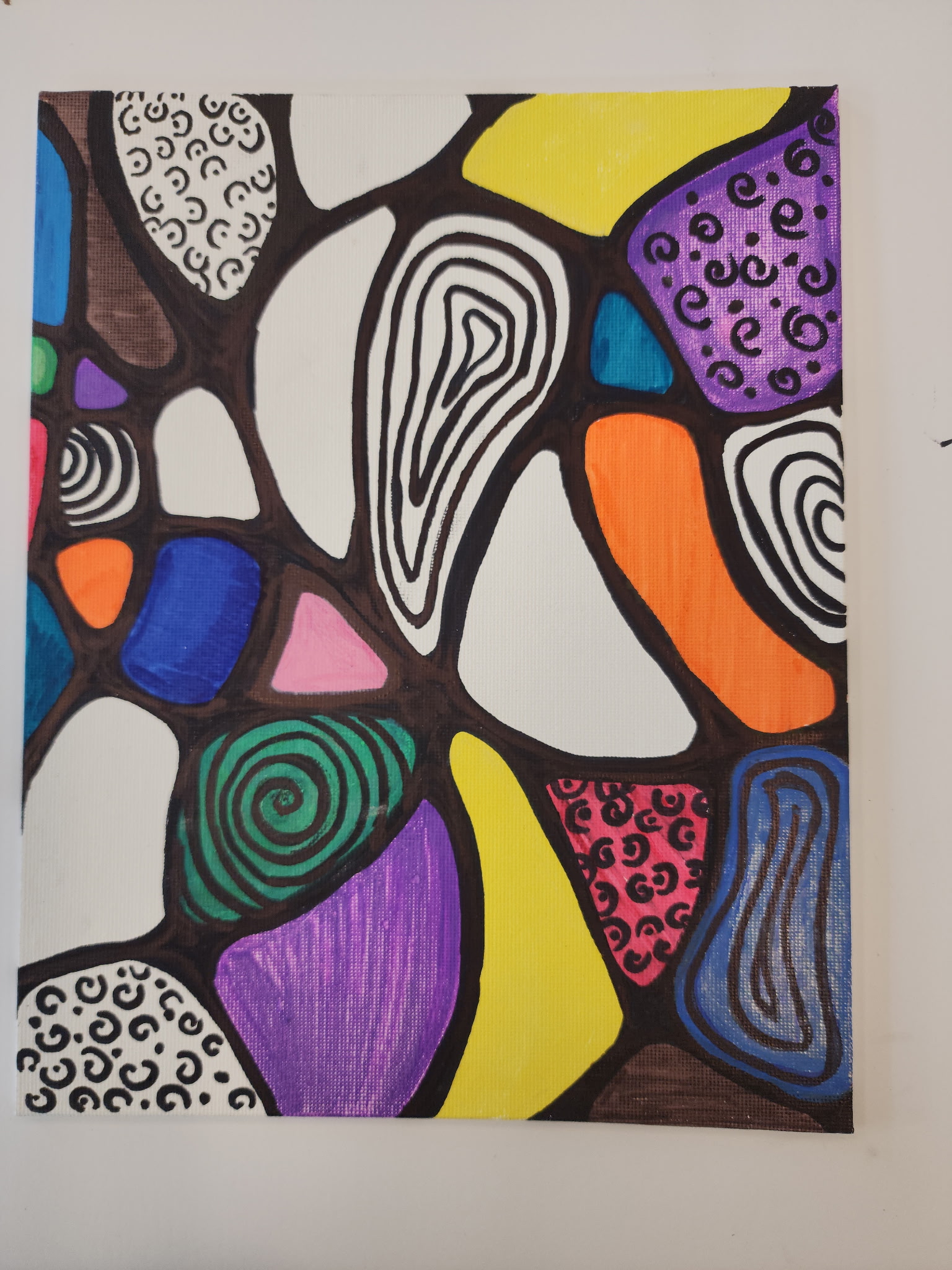
D. Garrett, Neurographica
levels, whether it’s mentally or physically.”
Artist Debbie Garrett, who will lead the neuro-arts session, will supply attendees with their own canvas and drawing and painting tools.
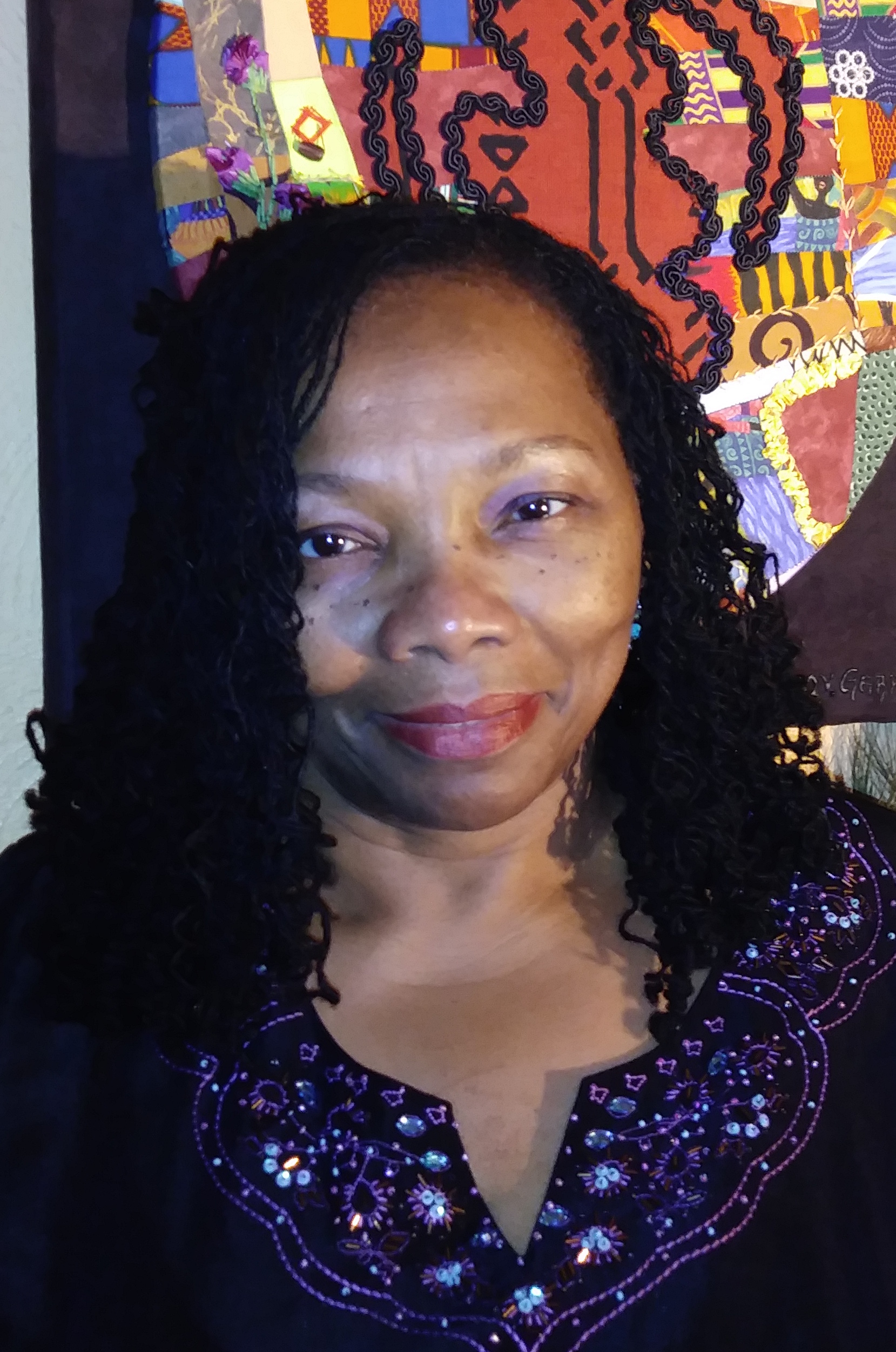
Artist, filmmaker, educator Debbie Yati Garrett brings neuro-arts to WADA on Nov 15
Garrett notes that the Neurographic Method was developed by a Russian psychologist, Pavel Piskarev, in 2014 – but, she added, “We’ve been doing it for many years. We call it scribbling, doodling.”
She shared that when people find themselves scribbling or doodling when distracted at work, it’s really an automatic instinct to tap into “the part of the right side of the brain that opens up creativity; it helps you to improve your focus.” It is, said the long-time educator and filmmaker, a way to open our minds “to receive information…and stop other chatter.”
She describes it as a series of curves, lines, and colors that help to stimulate the brain.
Attendees for the event should dress comfortably and will receive canvases to create on and bring home.
The event is free, and is designed for no more than 40 participants. Registration is required, visit https://tbuffest.com/register-to-attend-events.