Childcare is out of reach for most low-wage workers. Families with more than one child face an even larger burden.
BY INDHIRA SUERO ACOSTA, Staff Writer
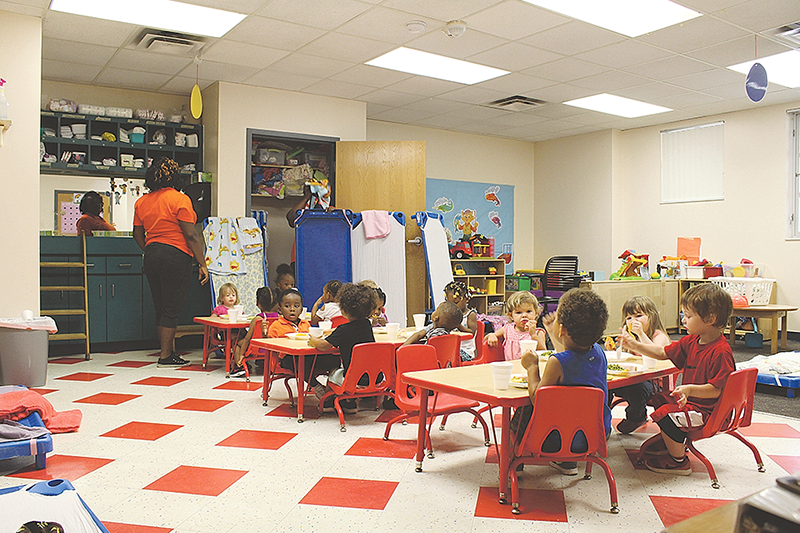
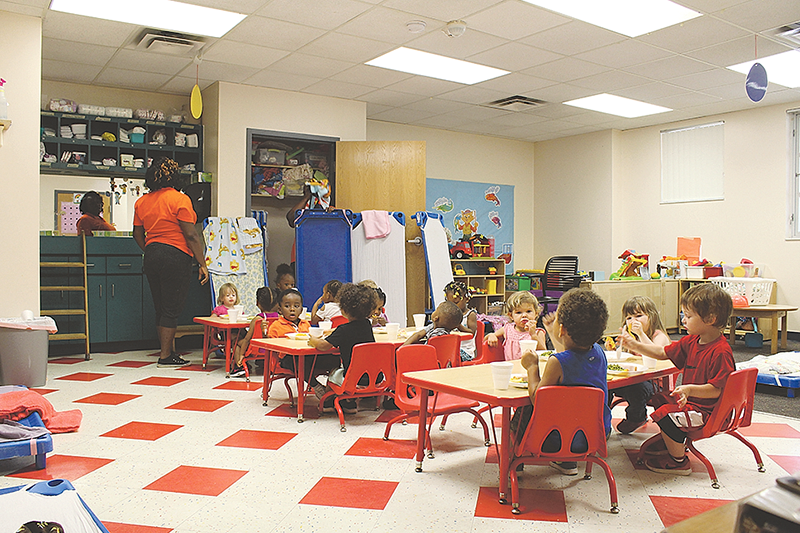
ST. PETERSBURG – Tabrisha Ruby, center director of the YWCA Child Development Center in St. Pete, understands what it’s like being a single parent and the challenges that arise from it. With a child of her own, she knows the struggles of millions of parents trying to raise their children.
The primary challenge faced by black parents, according to Ruby, is the high cost of childcare, which is comparable to a mortgage. For example, the cost of daycare at YWCA St. Pete is $259 a week. There are other centers in the area that charge upwards of $310 a week.
Imagine having four or five kids?
“When my son was an infant, he was able to stay with my aunt,” said Ruby, who she paid a small fee.
Childcare cost at the YWCA starts at $259 for an infant, $234 for a toddler, $187 for a three-year-old and $170 or $167 for a four-year-old.
The amount changes if the family receives help from the Voluntary Prekindergarten Education Program (VPK) and the Early Learning Coalition of Pinellas (ELC).
“ELC pays that difference, that’s why you have three hours of free childcare if your child is on VPK,” Ruby said. “If you want your child to be in an educational setting, you can bring them during the VPK hours, which for us right now is 9-12 p.m.”
Ruby considers it necessary to rebuild the donor base of local centers. That action would contribute to stopping them from raising tuition. In early 2017, the YWCA made a desperate plea to the community for $50,000 since they were unable to make payroll.
“We can still offer high-quality childcare to the children and keep our tuition at a low cost,” Ruby said.
With such absorbent amounts, parents are resulting to having a friend or family member care for their children. Without proper teaching tools or a specialized curriculum, some children enter kindergarten unprepared and unable to thrive in a structured environment, leading to behavioral issues.
“I know that a lot of times with African-American children, there’s not a lot of time spent on reading to them every night and sitting down and practicing writing,” Ruby said. “Whether it’s because the parents didn’t have it themselves or the parents work two or three jobs to make ends meet and there’s no one in the home that has time to sit down and do those things with you.”
There is a significant number of African-American students struggling with literacy and comprehension. With their structured, educational programs, the YWCA aims to bring these struggling children up to grade level.